Services

Scientific services

From a written target assessment to candidate design and agreed testing. Omics analysis, model training and application building can also be commissioned independently.

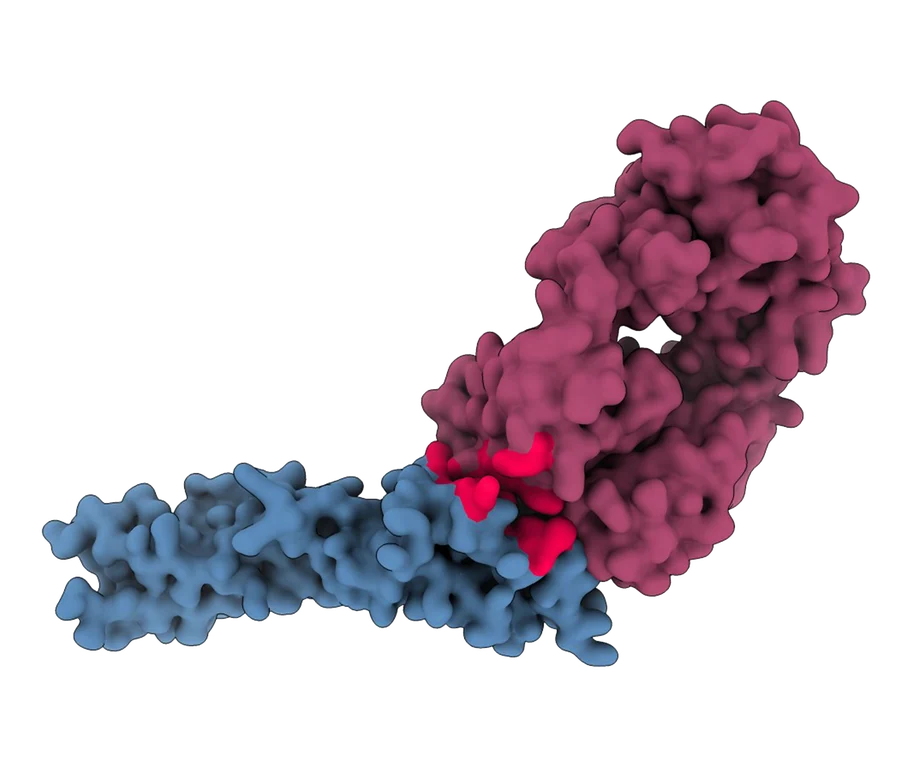
Molecular surface of a designed minibinder bound to a protein target

Seven services around one binder

Assessment, design and testing form the binder-development route. Omics, modelling and applications extend it where your question needs them. Each service has agreed deliverables, with one contract and one contact at InXBio.

By us, in silicoThrough a partner laboratory

By us, in silico

Minibinder design

Candidates designed against the agreed site, assessed computationally for structure and predicted cross-reactivity, then ranked with their selection rationale. You review the candidate set and construct plan before synthesis.

You bring
An agreed target site, from the assessment or from your own work.
You get
A prioritised candidate set and predicted structures, a ranking with supporting evidence, and the construct plan for your approval before synthesis.

Making and testing the binders is a service of its own: Production and testing.

Further reading

Molecular surface of a designed minibinder bound to a protein target
Illustrative render.

What it covers

  • Backbones and sequencesCandidates generated against the agreed site, then folded back and checked.
  • Counter-screeningComputational comparisons against the relatives you name help prioritise specificity testing.
  • A ranking with reasonsWhy those candidates and not the others, in terms you can disagree with.
  • Choosing the routeWhich tools, in which order. Explore the subway map of protein-design tools and workflows.
  • Which format fitsAntibody, nanobody or minibinder: the fold decides which epitopes a binder can reach, so the choice follows from the target.

We are still contracting our partner laboratories and name them per project.

Some projects need more than one service

This is where the services combine, and because each stage carries its own acceptance criteria, a project can be commissioned one stage at a time and stopped where the evidence stops.

Each stage has one objective and groups the services needed to reach it.

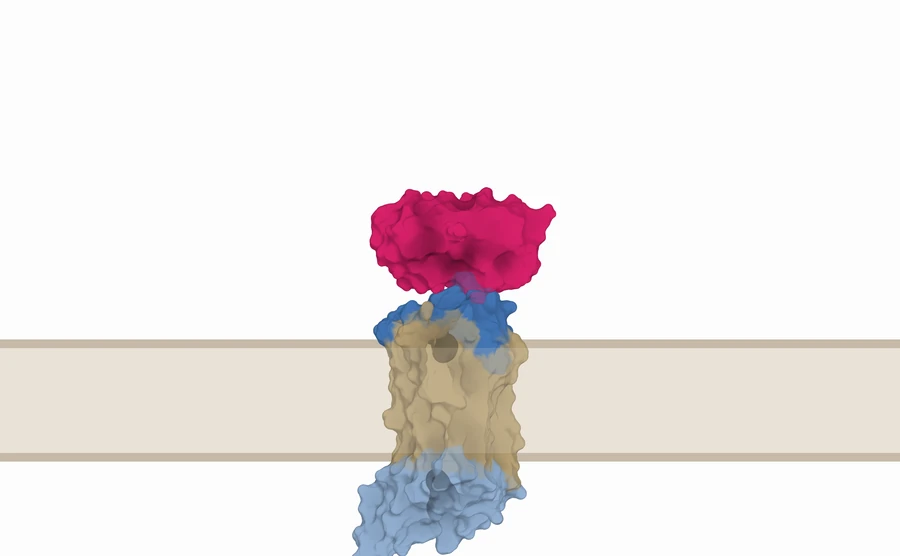
A minibinder, in rose, sitting on the loops of a receptor that crosses the membrane

One-stage project

A binder to detect a protein

The target and its structure are known. Assessment, design and experimental testing form one stage with a single objective: a binder that detects the protein.

  1. Develop the binder

    • Target assessment
    • Minibinder design
    • Production and testing
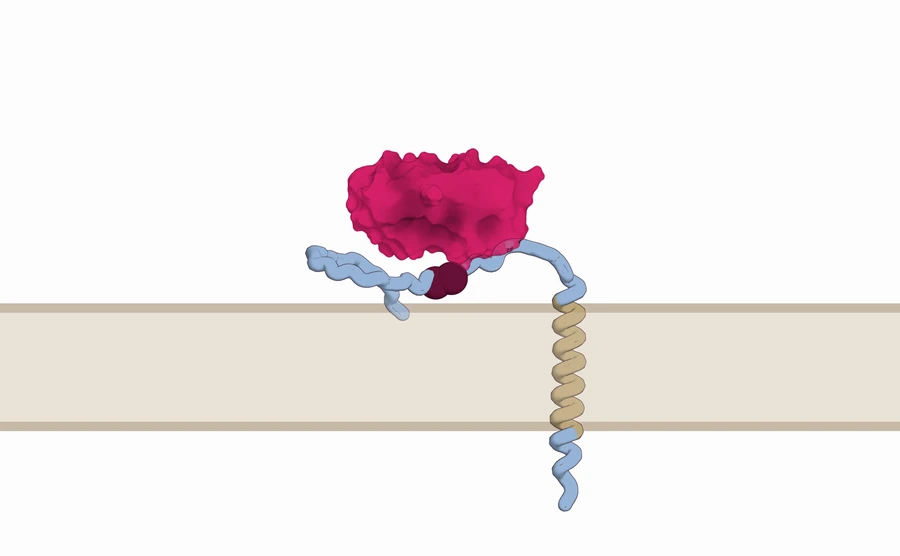
A minibinder, in rose, sitting on the stretch of the amyloid precursor protein where it is cut, just above the membrane

Two-stage project

Find the cut, then block it

Where the epitope has to be found first, a prediction step comes before the design: here, which position of the amyloid precursor protein a protease cuts.

  1. Locate the cleavage site

    • Model training and site prediction
  2. Develop the blocker

    • Target assessment
    • Minibinder design
    • Production and testing
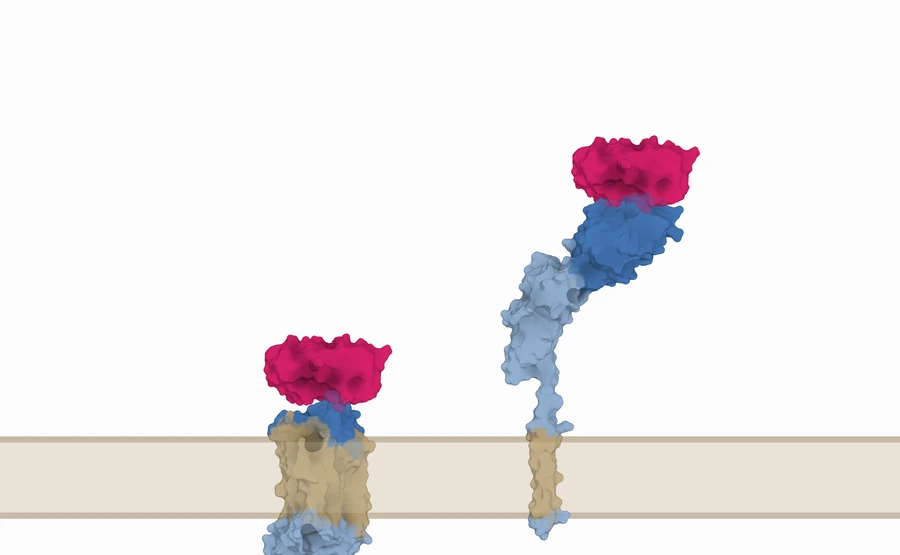
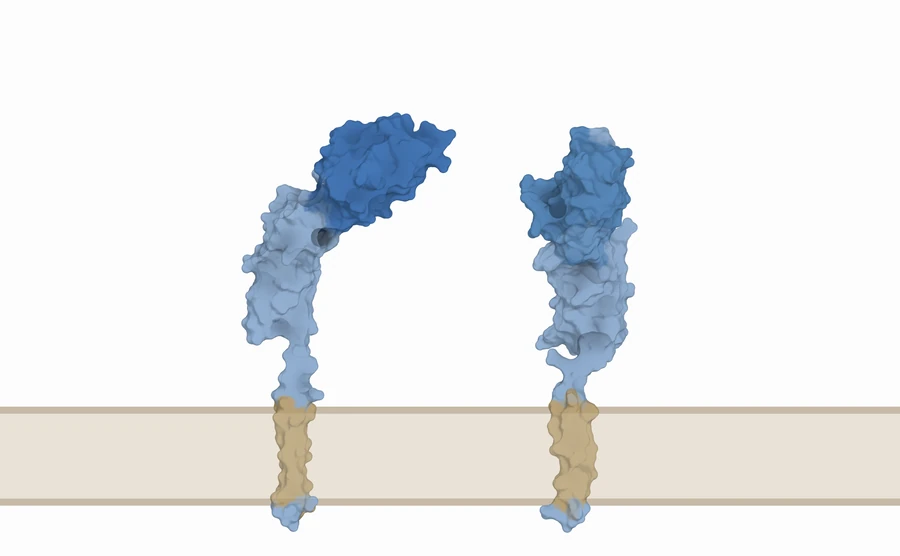
Two membrane proteins, each with a minibinder in rose on top, and a dashed linker joining the two binders

Three-stage project

Two binders, joined by a linker

Two binders against two different targets, coupled through a designed linker whose length and rigidity set the geometry of the pair.

  1. Develop the first binder

    • Assess the first target
    • Design and test its minibinder
  2. Develop the second binder

    • Assess the second target
    • Design and test its minibinder
  3. Join and validate the pair

    • Design the linker
    • Produce and test the combined construct

Illustrative project examples. The structures show possible project shapes, not experimental results.

How to order

Start with a free consultation to define the question. The paid assessment then returns a written feasibility recommendation. Design, production and testing proceed only within the scope, budget and acceptance criteria agreed for your project.

01ConsultationFree

Not sure whether a binder is the right tool, or which site to aim at? We talk through the target and the experiment, and whether an assessment makes sense.

02Target assessmentQuoted scope

A written judgement on the target and the site. Your quotation sets out the scope, budget, any assessment credit and follow-up work.

03Minibinder designGoal: 1 to 2 weeks

Candidates against the agreed site, counter-screened against the proteins you named and ranked with the reasons for the ranking.

04Your approval

You see the shortlist and the construct plan. Nothing is made until you approve them.

05Production and testingGoal: 3 to 5 weeks

Partner laboratories produce the selected binders and measure binding, in the assay format you declared.

06Documented result

A report against the criteria agreed up front, static or interactive, with the measurement context and any binders that met them. An application can be built on it, and we take part in writing the paper if you want one.

What we ask in the call

  • The target
  • A structure or a model
  • The biological context and existing data
  • What it must not bind
  • The assay it has to survive
  • What a useful result looks like

Missing answers are fine. Finding them is often the first deliverable.

Where a binder can aim

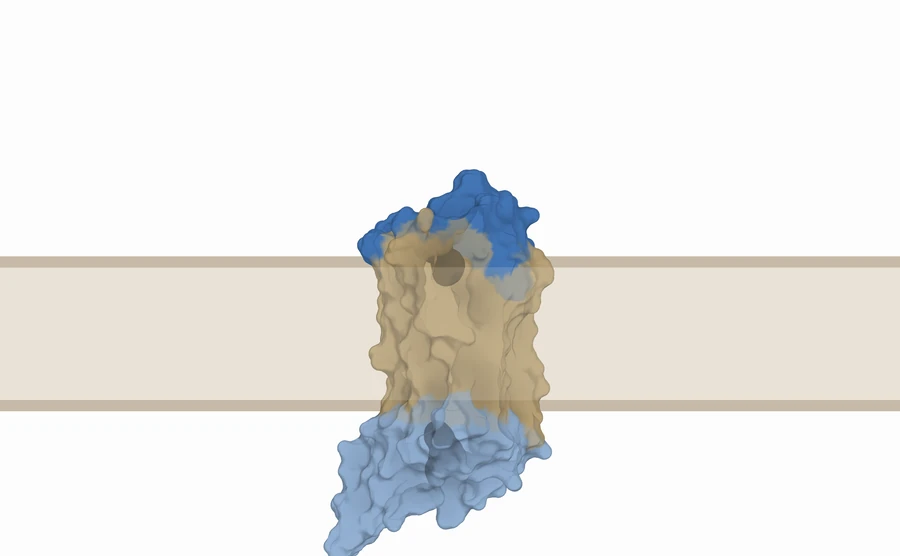
A seven-pass receptor in the membrane, with the loops outside the cell in blue

The assessment names the site. Example: a seven-pass receptor, where only the loops outside the cell can be reached.

From the site to a shortlist

Six illustrated workflow nodes connected in order: Target site, Backbones, Sequences, Fold check, Specificity, and Shortlist. Backbones shows a protein ribbon; Sequences adds coloured residue side chains to the same faded ribbon. A conceptual workflow with schematic molecular icons, not a live run. Target site INPUT Backbones DESIGN Sequences DESIGN Fold check CHECK Specificity EXPLAIN Shortlist OUTPUT

Illustrative workflow. The steps are chosen for the target and the assay.

You choose what is made

DesignInterfaceFoldPD-L2 riskTest?
bnd-0140.820.88low✓
bnd-0310.790.91low✓
bnd-0220.770.85low✓
bnd-0060.910.74high–

Illustrative predictions. The highest-scoring example is excluded because of predicted cross-reactivity risk. Testing checks whether that prediction holds.

Made, then measured

100 nM 30 nM 10 nM BINDER ON WASHED OFF RESPONSE
TARGETAVOID
Binding and selectivityMeasured against the agreed target and counter-targets
ONE PEAK
Size and aggregationSize-exclusion profile under the measured conditions
Tm
Thermal behaviourThermal response in the agreed buffer

Illustrative shapes, not measurements. Which of them is run is set by the assay format you declared, and the numbers go into the release record.

Release record

  • Affinity and kinetics
  • Size and aggregation state
  • Molecular mass and identity
  • Thermal stability
  • Counter-target specificity
  • Purity and concentration

What the report contains, against the criteria agreed before the work started.

We quote privately per project, in euro. We work with businesses, institutions and private customers, including institutional purchase orders. A complete campaign has a planning goal of 4 to 7 weeks; materials, assay requirements and laboratory availability determine the agreed schedule.

Assay-ready is a specification, not an adjective

Assay-ready means material that meets the acceptance criteria agreed for your assay. The record separates computational evidence from laboratory measurements and identifies the methods, conditions and sample used. The table shows the questions each can address; measurements are selected for the project.

PropertyComputational evidenceExperimental measurement
BindingPredicted interface and complex confidenceSPR or BLI
AggregationPredicted aggregation and solubilityAnalytical SEC
IdentityExpected mass, from the sequenceSDS-PAGE, intact LC-MS
Thermal stabilityPredicted thermal stabilitynanoDSF
SpecificityPredicted cross-reactivity against specified relativesSPR, BLI or ELISA
AmountSequence-derived extinction coefficient to interpret absorbanceA280, SDS-PAGE
Optional: specificity across the proteomeSequence and structure comparisons to prioritise off-target testsPull-down, MS

A computed value is a prediction, not a measurement. The record shows both.

Which format fits
Antibody, nanobody or minibinder: compare formats for your target and assay.

Tell us the target that is holding your experiment up

You get a straight answer about what is realistic.

Research use only. Scope, criteria and deliverables are agreed per project.