
Resources
Resources for biological research
Read a scientific explanation, use an application or inspect the research behind our methods.
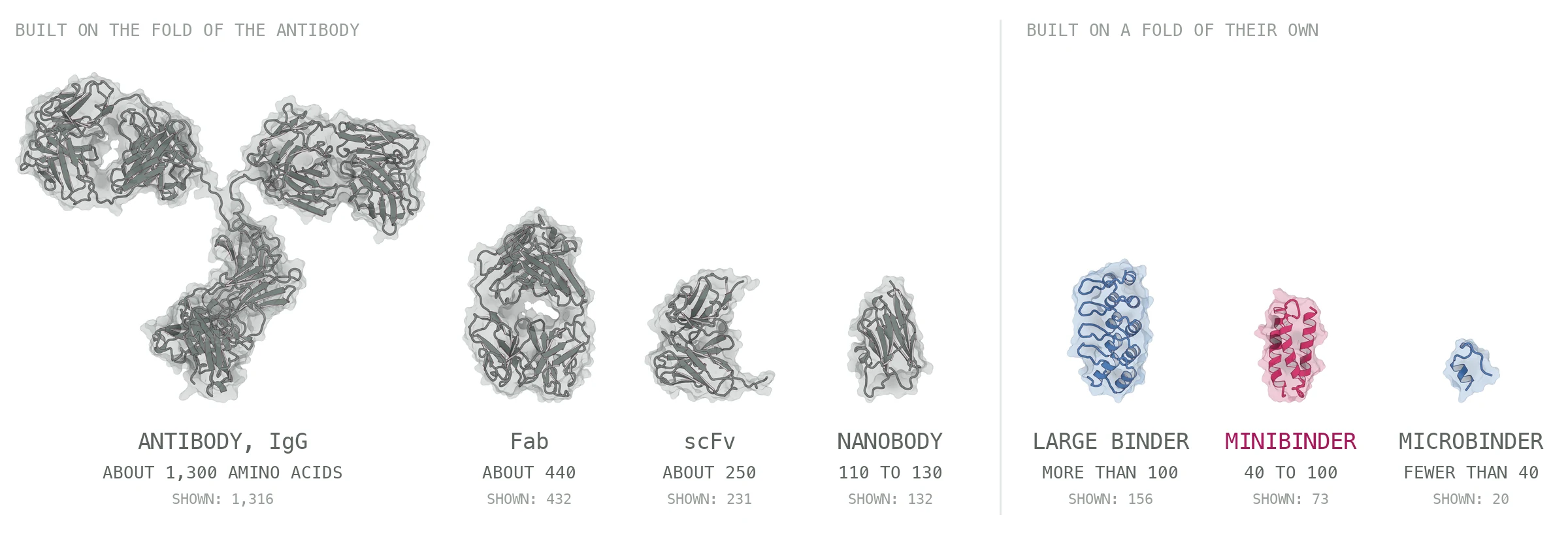
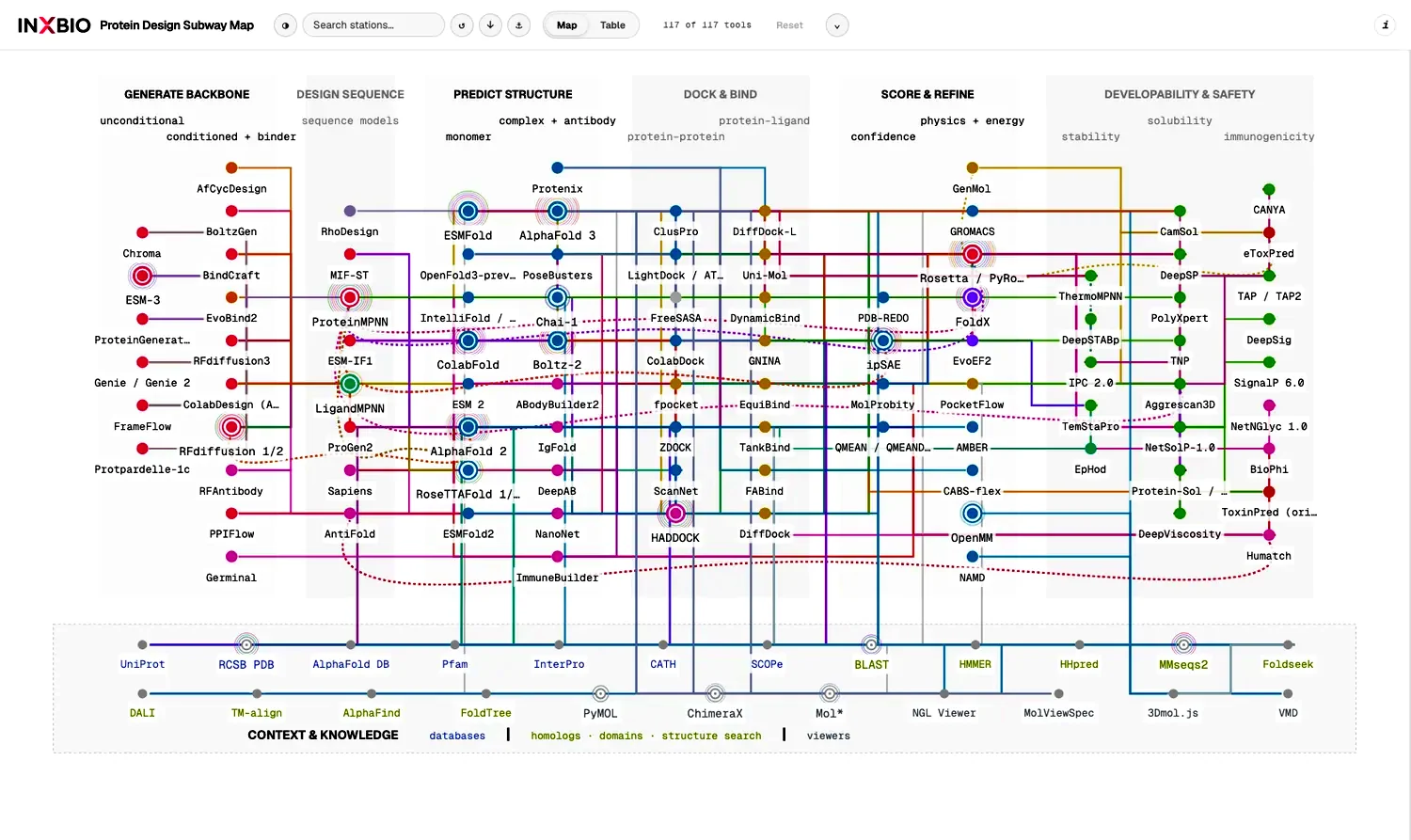
Field Notes
Select a note to previewShort explanations of protein design, explainable AI and the software behind biological research. Each note connects the methods to practical questions, with figures and links to the original research.


Found a correction or have a scientific question? Write to the author.
App
We build scientific applications around specific biological problems, combining machine learning, structural analysis and biological data analysis. Membrane Annotation illustrates the tailored tools we can build to help your team analyse and visualise data and make research decisions.
Publications
Research by our team and advisors, grouped by topic. Explore the papers below and the explainable sequence methods in our open-source AAanalysis framework.
Explainable sequence analysisThe line of work this company is built on
- Journal publication Breimann S et al. Charting γ-secretase substrates by explainable AI. Nature Communications 16, 5428 (2025). 10.1038/s41467-025-60638-zPredicts which proteins a membrane protease cuts, confirmed experimentally.
- Journal publication Breimann S, Frishman D. AAclust: k-optimized clustering for selecting redundancy-reduced sets of amino acid scales. Bioinformatics Advances 4, vbae165 (2024). 10.1093/bioadv/vbae165Selecting non-redundant amino-acid scales, so features stay interpretable.
- Journal publication Breimann S, Kamp F, Steiner H, Frishman D. AAontology: an ontology of amino acid scales for interpretable machine learning. Journal of Molecular Biology 436, 168717 (2024). 10.1016/j.jmb.2024.168717Amino-acid scales classified into interpretable property groups.
- Doctoral thesis Breimann S. Interpretable machine learning-based protein prediction. Doctoral thesis, Technical University of Munich (2025). mediatum.ub.tum.de/1763035The doctoral work the framework came out of.
More publicationsFewer publications
Proteomics and biomarkersWhere the data analysis comes from, and what it was used on
- Journal publication Tsai W-Y, Giesbertz P, Breimann S et al. Multi-platform integration of brain and CSF proteomes reveals biomarker panels for Alzheimer's disease. Briefings in Bioinformatics 27, bbag012 (2026). 10.1093/bib/bbag012Several proteomics platforms compared and combined into one analysis.
- Journal publication Kardell O, Breimann S, Hauck SM. mpwR: an R package for comparing performance of mass spectrometry-based proteomic workflows. Bioinformatics 39, btad358 (2023). 10.1093/bioinformatics/btad358An R package for comparing proteomics workflows.
- Journal publication Bernhardt AM et al. A unified classification approach rating clinical utility of protein biomarkers across neurologic diseases. EBioMedicine 89, 104456 (2023). 10.1016/j.ebiom.2023.104456A scheme for rating how far a protein biomarker is clinically validated.
Membrane proteins and proteasesThe protein class the methods were built for
- Journal publication Steiner H, Breimann S, Kamp F, Frishman D. From mechanism to substratome: unravelling mysteries of γ-secretase. Journal of Biological Chemistry 302, 113287 (2026). 10.1016/j.jbc.2026.113287How the protease works, and which membrane proteins it cuts.
- Journal publication Jocher G, Grass V, Tschirner SK, Riepler L, Breimann S et al. ADAM10 and ADAM17 promote SARS-CoV-2 cell entry and spike protein-mediated lung cell fusion. EMBO Reports 23, e54305 (2022). 10.15252/embr.202154305Two membrane proteases cut the viral spike protein and let lung cells fuse.
- Journal publication Hönigschmid P, Breimann S et al. AllesTM: predicting multiple structural features of transmembrane proteins. BMC Bioinformatics 21, 242 (2020). 10.1186/s12859-020-03581-8Predicts depth in the membrane, topology and other structural features.
With our advisorsResearch co-authored by our advisors, grouped by their scientific expertise
Protein language models
- Journal publication With our advisor, Dr Michael HeinzingerElnaggar A, Heinzinger M et al. ProtTrans: toward understanding the language of life through self-supervised learning. IEEE Transactions on Pattern Analysis and Machine Intelligence 44, 7112 (2022). 10.1109/TPAMI.2021.3095381
- Journal publication With our advisor, Dr Michael HeinzingerSchmirler R, Heinzinger M et al. Fine-tuning protein language models boosts predictions across diverse tasks. Nature Communications 15, 7407 (2024). 10.1038/s41467-024-51844-2
- Journal publication With our advisor, Dr Michael HeinzingerBordin N, Dallago C, Heinzinger M et al. Novel machine learning approaches revolutionize protein knowledge. Trends in Biochemical Sciences 48, 345 (2023). 10.1016/j.tibs.2022.11.001
Protein structure prediction and interaction data
- Journal publication With our advisor, Prof. Dmitrij FrishmanHeinig M, Frishman D. STRIDE: a web server for secondary structure assignment from known atomic coordinates of proteins. Nucleic Acids Research 32, W500 (2004). 10.1093/nar/gkh429
- Journal publication With our advisor, Prof. Dmitrij FrishmanPagel P et al. The MIPS mammalian protein-protein interaction database. Bioinformatics 21, 832 (2005). 10.1093/bioinformatics/bti115
- Journal publication With our advisor, Prof. Dmitrij FrishmanFrishman D, Argos P. Knowledge-based protein secondary structure assignment. Proteins 23, 566 (1995). 10.1002/prot.340230412
Agentic AI and knowledge graphs
- Journal publication With our advisor, Dr Sebastian LobentanzerLobentanzer S et al. A platform for the biomedical application of large language models. Nature Biotechnology 43, 166 (2025). 10.1038/s41587-024-02534-3
- Journal publication With our advisor, Dr Sebastian LobentanzerLobentanzer S, Rodriguez-Mier P, Bauer S, Saez-Rodriguez J. Molecular causality in the advent of foundation models. Molecular Systems Biology 20, 848 (2024). 10.1038/s44320-024-00041-wWhat a foundation model does and does not settle about cause.
- Journal publication With our advisor, Dr Sebastian LobentanzerLobentanzer S et al. Democratizing knowledge representation with BioCypher. Nature Biotechnology 41, 1056 (2023). 10.1038/s41587-023-01848-y
Protein design, and seeing one molecule at a time
- Journal publication With our advisor, Prof. Thomas SchlichthärleMuratspahić E et al. De novo design of miniproteins targeting GPCRs. Nature 656, 1044 (2026). 10.1038/s41586-026-10656-8
- Journal publication With our advisor, Prof. Thomas SchlichthärleYang W et al. The past, present and future of de novo protein design. Nature 652, 1139 (2026). 10.1038/s41586-026-10328-7
- Journal publication With our advisor, Prof. Thomas SchlichthärleSchlichthärle T, Lindner C, Jungmann R. Super-resolved visualization of single DNA-based tension sensors in cell adhesion. Nature Communications 12, 2510 (2021). 10.1038/s41467-021-22606-1Single force sensors, resolved one molecule at a time where a cell grips.
Tell us the target that is holding your experiment up
You get a straight answer about what is realistic.
Research use only. Scope, criteria and deliverables are agreed per project.