Innovate biology

From hard target
to assay-ready
minibinders

Minibinder design and explainable bioinformatics for hard protein targets. Start with a written target assessment; we design candidates and coordinate partner-laboratory testing.

Four reasons a target is hard

Accessibility, immune tolerance, specificity and antigen quality create different obstacles to binder discovery. Each example shows a question we assess before choosing a design and testing strategy. Our work includes membrane and soluble proteins.

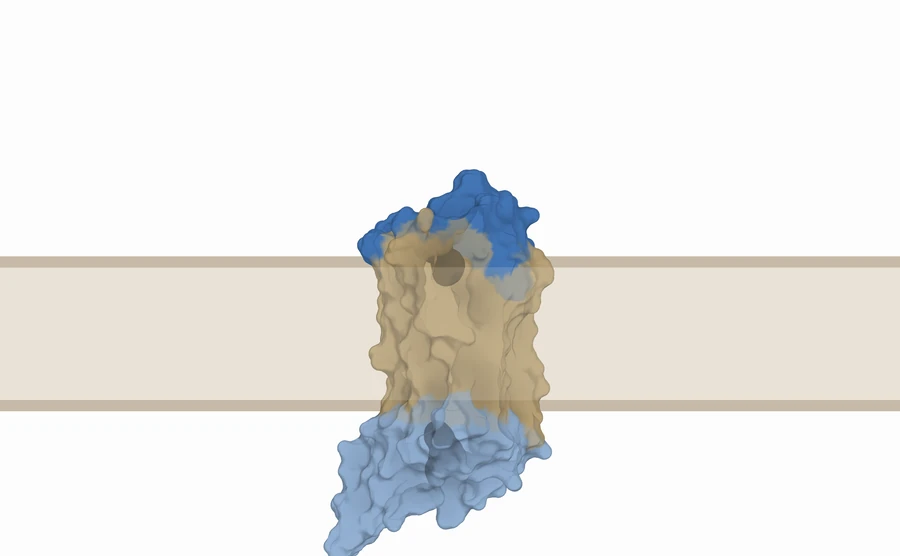
A seven-transmembrane receptor embedded in a lipid bilayer, with the loops outside the cell in blue

A, accessibility-limited

The surface is hard to reach

A small, recessed or partly covered epitope can limit which binder shapes reach it. We assess accessibility in the relevant protein structure and biological context.

Shown: a multi-pass membrane protein, where only the short extracellular loops are accessible in the native fold.
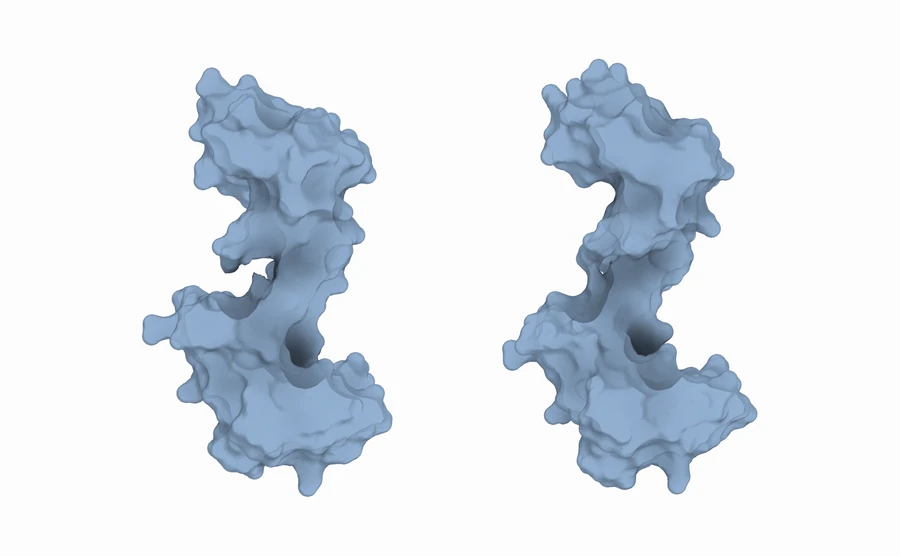
Human and mouse calmodulin side by side: the two proteins have the same sequence and look the same

B, immune tolerance-limited

Immune tolerance limits the response

A protein conserved between human and mouse may elicit little immune response. Computational design starts from its structure, without relying on an animal to produce antibodies.

Shown: a protein conserved to the residue, since human and mouse calmodulin share one sequence.

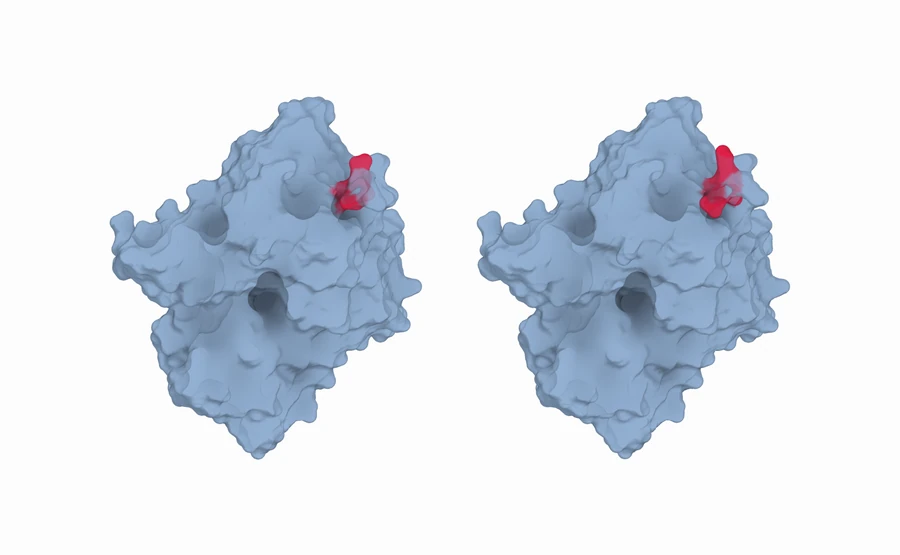
Beta-actin and gamma-actin side by side: two nearly identical proteins, with the few positions where they differ marked in rose

C, discrimination-limited

The neighbour looks the same

Closely related proteins can share the same binding surface. We include the proteins to avoid in the assessment and computational comparison; selectivity is established by the agreed experimental tests.

Shown: two paralogues that differ at a handful of positions, β-actin and γ-actin.

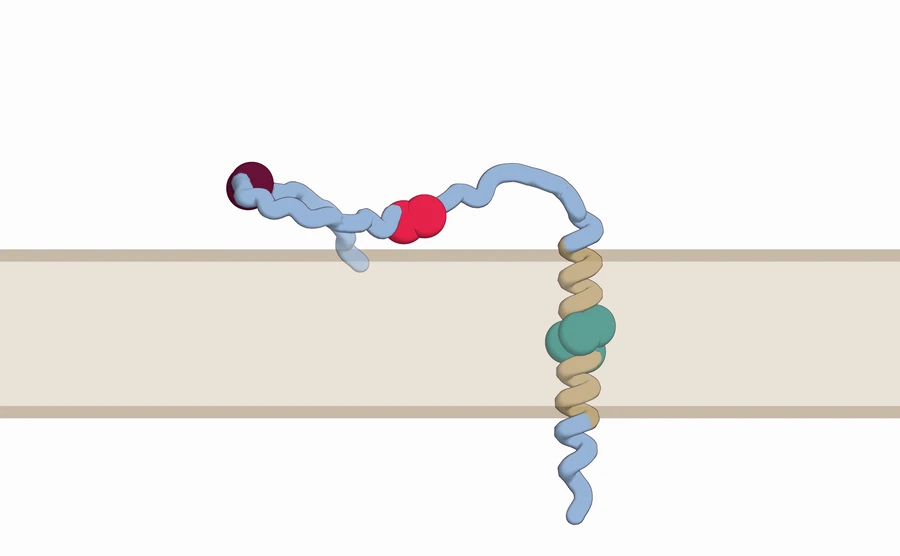
The membrane region of the amyloid precursor protein, drawn as a tube, with the secretase cleavage sites marked

D, antigen supply-limited

The antigen will not behave

Misfolding, aggregation or poor expression can compromise a binding assay. A structure or model supports an initial assessment, while representative target material remains essential for experimental testing.

Shown: a flexible stretch held in the membrane, from the amyloid precursor protein.

One problem, solved end-to-end

We support your complete biological data journey: from omics analysis and explainable modelling to target assessment, protein design, experimental testing and scientific applications. These services form a closed loop, with new data and results informing the next round of work. You receive the evidence behind each decision and can commission the complete cycle or individual services.

By us, in silicoThrough a partner laboratory

From small data to big data, with one contract and one contact. Order one service, or several in a row. We select the laboratory for your assay, coordinate the work and report the result. We are still contracting our partners and name them per project.

You see why a candidate was chosen

AAanalysis, our open framework, connects sequence predictions to physicochemical properties and residue positions. These features support a selection you can inspect and hypotheses you can test.

Published and open. γ-Secretase substrates, AAontology, AAclust, and the AAanalysis package.

The published methods make the basis of a prediction available for review and experimental testing.

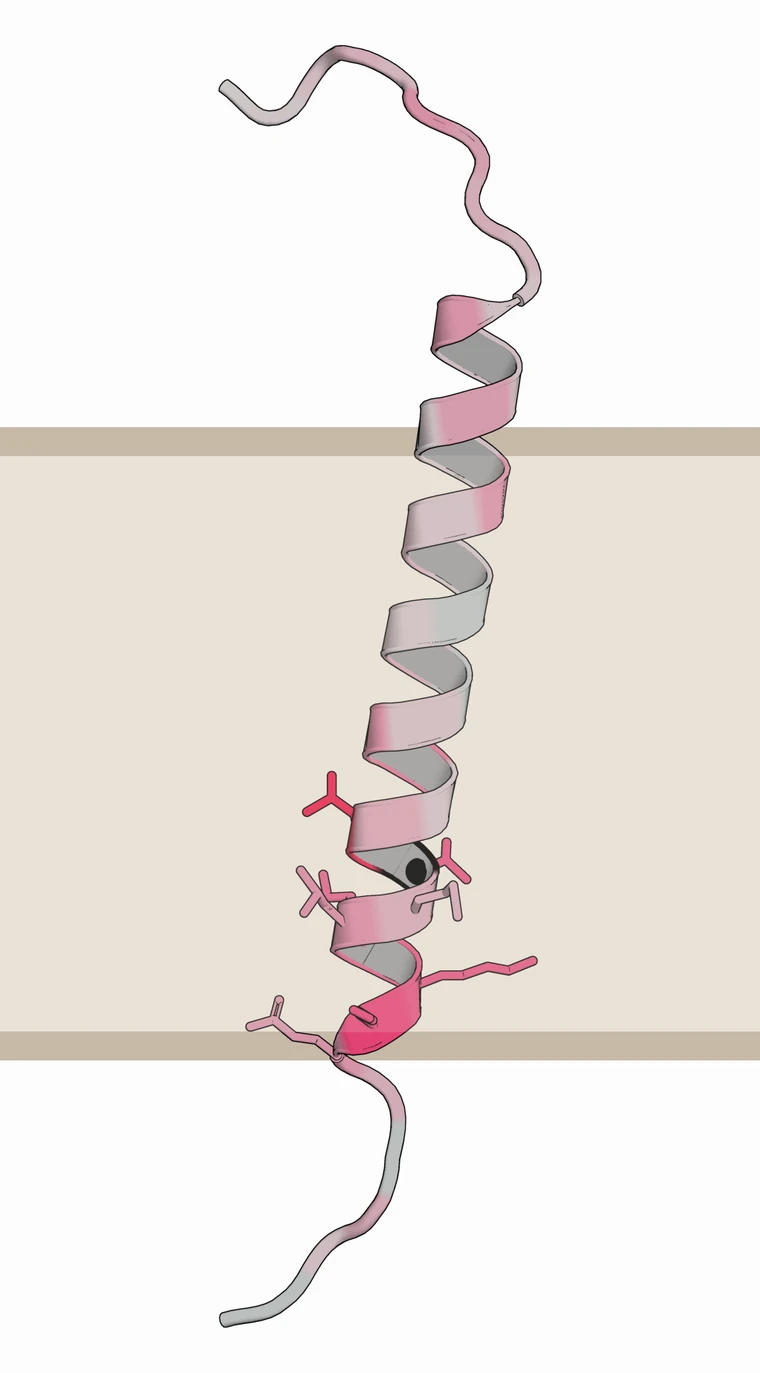
The membrane-spanning stretch of the amyloid precursor protein, with every residue coloured by how much it raised or lowered the prediction
APPwhat the prediction rests on, position by positionFAEDVGSNKGAIIGLMVGGVVIATVIVITLVMLKKKQYTSIHHCLEAVAGE SITEOUTSIDEMEMBRANEINSIDE
The same impact twice, on the structure and along the sequence. From our published work on which proteins γ-secretase cuts.
  • Properties and positionsFeatures and residues, not a score alone.
  • A ranking you can questionThe reasons come with the shortlist.
  • Hypotheses for the benchAn explanation names what to measure next.

Published result

A fully explainable framework, and it beat the black box

Predicting which proteins γ-secretase cuts, our published Comparative Physicochemical Profiling (CPP) framework beat embeddings from a state-of-the-art protein language model. Every feature it uses is a named property at a named position.

60%→90%

Prediction accuracy, against a protein language model

88%

15 of 17 predictions confirmed experimentally

Breimann et al., Nature Communications 16, 5428 (2025). 10.1038/s41467-025-60638-z. The methods are our own and open: AAontology, AAclust, AAanalysis The published result concerns γ-secretase substrate prediction. Read the study for its benchmark design.

For labs with a defined target

Academic groups and biotech companies, starting in the German-speaking region.

Academic groups

A defined target and limited capacity for a design campaign. Commission the assessment first, then decide whether to proceed with candidate design and testing.

Biotech companies

A research reagent, or an answer before you commit. Scope and rights are settled before the work starts.

Teams with data

A biological question and data ready to analyse. Receive interpretable results, figures and a pipeline your group can run again.

Tell us the target that is holding your experiment up

You get a straight answer about what is realistic.

Research use only. Scope, criteria and deliverables are agreed per project.

Built at the Technical University of Munich

Technical University of Munich TUM Venture Labs AI Nation

Where our team studied and our advisors work

Technical University of Munich LMU Munich Helmholtz Munich DZNE